Deployment Success! A first look at the data collected by the ACM unit this summer at the Ythan Estuary
This June and July, we successfully deployed the ACM unit to monitor the population of grey seals at the Ythan Estuary. The unit, comprised of colour camera and thermopile sensor, documented seals hauling out in the estuary from its position atop the highest dune on the south bank every 15 minutes, 24-hours a day. We were pleased to find that the batteries supplied power for a continuous 38 days on a single charge. This is promising for future deployments with the solar panel, as we now know the unit can function without a top of charge for over a month. In the nearly 3,000 pairs of images taken, we can see when and where the grey seals hauled out along the beach each day.

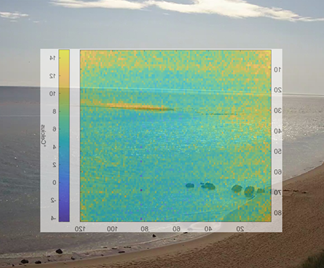
We sorted the images into those that contained seals and those that did not, and we are now in the process of counting the seals in the images, and comparing the number of seals to the amount of thermal energy captured by the thermopile sensor. To validate our numbers, we were lucky to be able to continue our collaboration with Claire Stainfield of SRUC, and obtained counts from her aerial footage of the estuary referenced in our previous post. With this, we hope to gain a better idea of when and how many individuals are using this haul out site throughout the year. This is valuable to a wide range of monitoring applications such as tracking population trends and identifying disturbance events. We are currently planning a second deployment at another location to compare how the system functions in a range of environments.
From Delays to Data: Successful Thermal Image Capture and Drone Collaboration
After a series of unexpected delays, we’re excited to share that our thermopile sensor is up and running! While still in the testing phases, we’re one big step closer to deploying a system that provides near-real time data on seal numbers and behaviour at the Ythan Estuary.
Our initial tests have shown promising results, with hauled-out seals visible in bright red/orange in the thermal imagery (below). We are currently in the process of comparing the thermal imagery to traditional colour images taken with a digital camera in order to develop an index of seal numbers.
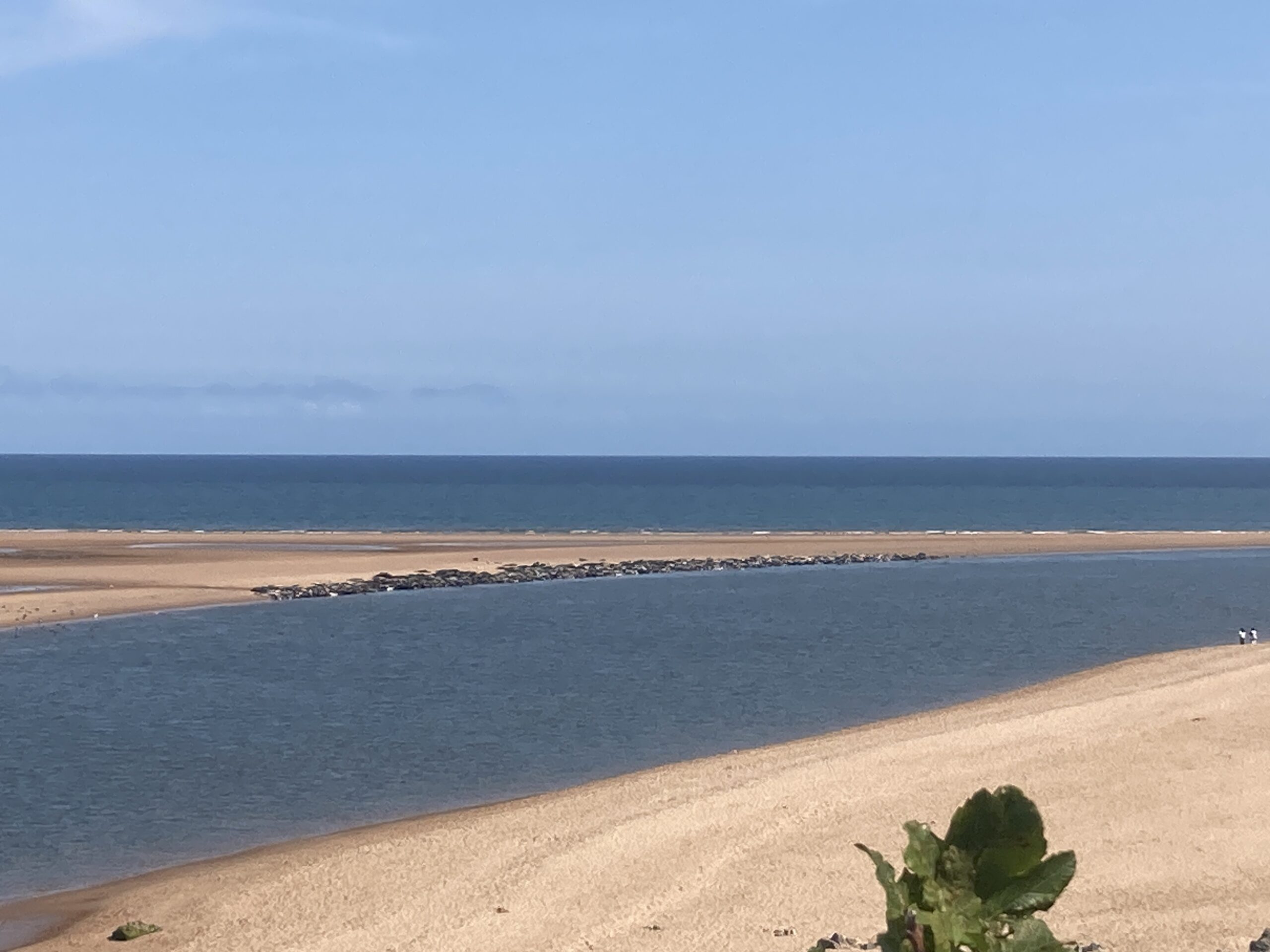

We’ve also luckily been able to collaborate with a PhD student from Scotland’s Rural College (SRUC), Claire Stainfield, who is utilising drones to conduct aerial counts of the seals at the Ythan. Claire’s drone images are so high-quality that she can obtain precise counts of the number of individual seals at the haul-out. By comparing data from our systems with the drone footage, we will be able to calibrate and validate our counts more accurately. The image below was taken at the same time that the two images above were taken, and revealed a total of 1,019 hauled-out seals! Claire’s research is conducted under permit from NatureScot.

Looking ahead, we plan to continue testing and refining the system this with an eye toward starting a longer-term deployment this autumn. Stay tuned for more updates as we continue to fine-tune our system and gather valuable data on these remarkable marine mammals!